


ESD Floor Maintenance Guide: How to Extend the Life of Your Conductive Flooring System

An ESD floor is more than a finished walking surface. In facilities where sensitive electronics, components, medical equipment, or controlled manufacturing processes are present, the flooring system can form an important part of the overall electrostatic discharge control strategy. Keeping that system functional requires more than routine cleaning. Facilities managers also need to monitor contamination, wear, grounding, surface resistance, footwear compatibility, and maintenance practices.
BSP Floors provides ESD flooring systems using conductive and dissipative PVC as well as conductive and dissipative rubber tiles. Its ESD flooring is intended for environments such as data centers, computer rooms, server rooms, clean rooms, control rooms, and other areas where static control is important.
An ESD floor is designed to control the buildup and movement of electrostatic charge. Its performance depends on more than the flooring material itself. The floor, grounding path, footwear, people, equipment, environment, and maintenance program can all influence the effectiveness of an ESD protected area.
Contamination is particularly important. Dirt, dust, residues, and other materials can create a barrier between footwear and the conductive elements of the floor. StaticWorx similarly recommends treating maintenance as an ongoing program involving cleaning, inspections, employee training, and testing in both high- and low-traffic areas.
For facilities managers, this means an ESD floor should be managed as part of the facility's static-control system rather than treated like an ordinary commercial floor.
Understanding Surface Resistance
Surface resistance is one of the most useful measurements when evaluating an ESD floor. It helps determine whether the flooring material remains within the electrical range required by the facility's ESD control program.
The EOS/ESD Association identifies conductive flooring as having resistance at or below 1.0 × 10^6 ohms and static-dissipative flooring as greater than 1.0 × 10^6 ohms and less than 1.0 × 10^9 ohms. However, facilities should always use the requirements applicable to their specific ESD program and flooring system rather than assuming one measurement applies to every installation.
What Can Change Surface Resistance?
Several factors can affect readings over time:
- Dirt and surface contamination
- Chemical residue
- Incorrect cleaning products
- Surface wear
- Damaged tiles or seams
- Changes to grounding connections
- Incompatible floor coatings
- Excessive abrasion
- Environmental conditions
- Changes in footwear or equipment
A change in resistance does not automatically mean the entire floor needs replacement. Testing should be used to identify the cause before deciding on corrective action.
Build a Practical ESD Floor Cleaning Protocol
A useful cleaning protocol should be specific enough that different members of the facilities team can follow the same process.
Daily Cleaning
Daily cleaning should focus on removing loose dust, dirt, and debris before contamination becomes embedded in the floor.
Depending on traffic and facility conditions, this may include:
- Dry dust mopping or vacuuming.
- Removing visible debris from high-traffic areas.
- Cleaning spills promptly.
- Checking entrances for dirt accumulation.
- Recording unusual contamination or damage.
The objective is not simply appearance. Keeping the surface free of insulating contamination helps maintain reliable contact between ESD footwear and the floor.
Routine Wet Cleaning
Use a cleaner approved for the particular ESD flooring system. StaticWorx recommends neutral-pH cleaning products and warns against harsh chemicals, abrasive tools, and stiff brushes that could damage the flooring.
A typical process should include:
- Remove loose debris.
- Apply the approved cleaning solution at the manufacturer's recommended concentration.
- Use compatible equipment and pads.
- Avoid excessive water where the flooring system does not permit it.
- Remove dirty solution and residue.
- Allow the area to dry appropriately.
- Inspect the surface after cleaning.
Do not introduce a new cleaner, coating, sealant, or maintenance chemical without confirming compatibility with the installed flooring.
Products and Practices to Avoid
One of the most important lessons from ESD flooring maintenance guidance is that a product that works on ordinary flooring may not be appropriate for an ESD system.
Avoid unapproved:
- Wax
- Polish
- Sealers
- Solvent-based chemicals
- Aggressive degreasers
- Abrasive pads
- Harsh stripping chemicals
- Adhesive-backed materials that interfere with the ESD system
- Insulating mats where they are not permitted by the ESD program
ARDEX Endura specifically identifies wax and polish, heavy-load dragging, harsh chemicals, insulating mats, and non-conductive tape as practices that can compromise ESD flooring performance.
The correct approach is not to assume that every finish is harmful. Some ESD-specific systems are designed to accept compatible finishes or sealers. The critical requirement is to follow the flooring manufacturer's documented system requirements and verify performance afterward.
Conductive Rubber Tiles vs. Conductive PVC
Material selection can influence both maintenance and renewal decisions.
BSP Floors lists conductive and dissipative rubber tiles alongside conductive and dissipative PVC flooring as ESD flooring options.
|
Factor |
Conductive Rubber Tiles |
Conductive PVC |
|---|---|---|
|
Common format |
Rubber tile |
PVC tile or sheet |
|
Static-control role |
Conductive pathway |
Conductive pathway |
|
Maintenance |
Requires compatible cleaning |
Requires compatible cleaning |
|
Damage concern |
Cuts, wear, seams |
Scratches, wear, seams |
|
Renewal approach |
Replace or repair affected areas where practical |
Replace or repair affected areas where practical |
|
Best practice |
Follow system-specific instructions |
Follow system-specific instructions |
The choice should be based on the facility's operational requirements, environmental conditions, traffic, chemical exposure, installation system, and required electrical performance.
Epoxy vs. Vinyl ESD Flooring
Facilities managers may also encounter conductive or dissipative epoxy systems when evaluating an existing floor or planning a renovation.
|
Consideration |
ESD Epoxy |
ESD Vinyl |
|---|---|---|
|
Construction |
Resin-based coating/system |
PVC tile or sheet system |
|
Seam profile |
Can provide a seamless surface when properly installed |
Tile installations can have joints |
|
Repair |
Damaged areas may require coating repair |
Individual damaged areas may sometimes be replaced |
|
Installation |
Requires suitable substrate preparation |
Requires suitable substrate and installation |
|
Maintenance |
System-specific chemistry required |
Manufacturer-approved cleaning required |
|
Renewal |
Often involves recoating or system repair |
May involve tile/sheet replacement or renewal |
There is no universal winner. The right system depends on the facility's requirements, existing substrate, traffic, chemical exposure, electrical specifications, downtime limitations, and maintenance strategy.
Inspect Static Grounding Regularly
A conductive floor cannot perform its intended role if the electrical pathway to ground is compromised.
Facilities managers should include static grounding in routine inspections. Check for:
- Loose or damaged grounding connections
- Installation changes around grounding points
- Damaged floor sections
- Unauthorized coatings
- New equipment that may affect the grounding arrangement
- Changes to floor transitions or adjacent materials
Grounding verification should be performed by qualified personnel using procedures appropriate to the facility's ESD program.
Do not assume that a floor is functioning correctly simply because it looks clean and undamaged.
Create an ESD Testing Schedule
A maintenance plan should define when testing takes place, who performs it, where measurements are taken, and how results are documented.
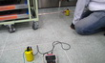
ANSI/ESD S20.20 identifies flooring requirements and references methods such as ANSI/ESD STM7.1 for flooring resistance. The appropriate testing frequency should be established within the facility's documented ESD control program.
A practical schedule can include:
|
Frequency |
Recommended Activity |
|---|---|
|
Daily |
Cleaning and visual inspection |
|
Weekly |
High-traffic and spill-area inspection |
|
Monthly |
Maintenance review and contamination assessment |
|
Quarterly |
Detailed condition review in higher-risk facilities |
|
Annually |
Formal electrical verification where required by the ESD program |
|
After major repairs |
Re-test affected areas |
|
After coating changes |
Verify electrical performance |
|
After significant chemical exposure |
Inspect and test affected areas |
The exact schedule should be adjusted according to traffic, contamination, risk level, manufacturer instructions, and the facility's ESD control plan.
Use Safety Audits to Find Problems Early
A good safety audit should not focus solely on whether the floor looks clean.
Audit the entire system:
- Floor condition
- Surface resistance
- Grounding
- Footwear compatibility
- Cleaning chemicals
- Cleaning equipment
- High-traffic zones
- Repair history
- Test records
- Employee procedures
- Unauthorized floor modifications
Testing should also be representative of the facility. ESD guidance recommends paying particular attention to areas exposed to wear, chemical spills, or visible contamination.
When Is ESD Floor Renewal Necessary?
ESD floor renewal should not automatically mean complete replacement.
Depending on the findings, corrective action may involve:
- Deep cleaning
- Removing incompatible residue
- Repairing damaged sections
- Replacing individual tiles
- Correcting grounding issues
- Restoring an approved surface treatment
- Re-testing affected areas
- Replacing the flooring system when performance cannot be restored
A renewal decision should consider both physical condition and electrical performance.
Signs That a Renewal Assessment Is Needed
Look for:
- Repeated resistance-test failures
- Extensive surface wear
- Cracked or damaged tiles
- Persistent contamination
- Failed seams or joints
- Grounding problems
- Unapproved coatings
- Areas where cleaning no longer restores acceptable condition
- Significant changes in facility operations
The key principle is simple: diagnose first, replace second.
Common ESD Floor Maintenance Mistakes
Treating ESD Flooring Like Ordinary Flooring
Standard cleaning practices may introduce products or methods that alter electrical performance.
Focusing Only on Appearance
A floor can look excellent and still fail an electrical test.
Ignoring High-Traffic Areas
Wear often develops first where employees, carts, and equipment repeatedly travel.
Failing to Document Testing
Without records, facilities teams may struggle to identify gradual resistance changes or demonstrate that maintenance procedures are being followed.
Changing Cleaning Chemicals Without Review
Even a familiar commercial cleaner can leave residues or affect the surface.
Forgetting the Complete Grounding Path
Testing the floor material alone may not tell the whole story. The footwear and person-flooring system may also need evaluation under the facility's ESD program.
Expert Tips for Facilities Managers
A few management practices can make ESD floor maintenance easier.
Assign Clear Responsibility
Specify who is responsible for daily cleaning, inspections, electrical testing, documentation, and corrective actions.
Keep a Product Approval List
Maintain a written list of approved cleaners, pads, equipment, finishes, and other materials.
Map Test Locations
Create a floor plan showing regular testing points. Include high-traffic and higher-risk locations rather than testing only convenient areas.
Track Trends, Not Just Pass or Fail
A gradual change in resistance can be more informative than a single measurement. Compare current results with previous readings to identify deterioration.
Coordinate Maintenance With Operations
Schedule deep cleaning, repairs, and testing around production requirements to reduce disruption.
Re-Test After Significant Changes
A major repair, coating change, chemical incident, or modification to the grounding system should trigger an evaluation rather than waiting for the next routine test.
ESD Floor Maintenance Checklist
Before closing a maintenance cycle, facilities managers can use this checklist:
- Approved cleaning products were used.
- Loose dirt and debris were removed.
- High-traffic areas were inspected.
- Spills and chemical contamination were addressed.
- No unauthorized wax or coating was applied.
- Tiles, seams, and transitions were inspected.
- Grounding connections were checked where required.
- Surface resistance testing was completed according to the ESD program.
- Test locations and results were documented.
- Corrective actions were assigned.
- Repairs were re-tested where necessary.
- Maintenance records were retained.
Frequently Asked Questions
How often should an ESD floor be cleaned?
An ESD floor should be cleaned according to traffic, contamination, operating conditions, and the flooring manufacturer's instructions. High-traffic facilities may require daily dry cleaning and more frequent wet cleaning.
Can you wax an ESD floor?
Do not apply conventional wax or floor finish unless the specific ESD flooring manufacturer has approved that product and maintenance procedure. An incompatible coating can affect the electrical characteristics of the flooring system.
How do you test ESD floor performance?
ESD floor performance can be evaluated using appropriate resistance and system-level testing methods specified by the facility's ESD control program. ANSI/ESD STM7.1 is associated with flooring resistance measurements, while other methods evaluate the footwear, person, and flooring system together.
What is the difference between conductive and dissipative flooring?
Conductive flooring has a lower electrical resistance and allows charge to move away more readily, while dissipative flooring controls the rate at which charge moves. The required category depends on the facility's ESD control requirements and application.
When should an ESD floor be replaced?
Replacement should be considered when physical deterioration or electrical performance cannot be restored through approved cleaning, repair, grounding correction, or other maintenance measures. Testing and professional assessment should guide the decision.
Conclusion
A properly maintained ESD floor is an important component of a controlled static environment. Extending its service life requires a coordinated approach that combines cleaning, inspection, surface resistance testing, static grounding verification, employee procedures, and documented safety audits.
Facilities managers should avoid treating ESD flooring as ordinary flooring. The cleaning protocol must match the installed system, maintenance materials should be approved, and electrical performance should be verified according to the facility's ESD control requirements. Conductive rubber tiles, conductive PVC, dissipative flooring, and other ESD systems may have different maintenance requirements, so manufacturer specifications should remain the starting point for any maintenance program.
BSP Floors provides ESD flooring solutions including conductive and dissipative PVC and rubber flooring systems for static-sensitive environments. For information about ESD flooring systems, maintenance requirements, or project-specific flooring needs, BSP Floors through its official website and discuss the requirements of your facility with its team.
Contact us to review your ESD flooring requirements and determine an appropriate flooring and maintenance approach for your facility.