






Why Conductive Rubber Tiles Are Ideal for ESD-Sensitive Environments

Conductive rubber tiles provide a controlled path for electrostatic charges to move toward ground, making them suitable for environments where static discharge can damage sensitive electronics. Their durability, cleanability, slip resistance, and compatibility with ESD control systems make them a practical flooring option for electronics facilities, laboratories, cleanrooms, and other controlled work areas.
What Are Conductive Rubber Tiles?
Conductive rubber tiles are specialized flooring solutions designed to safely control and manage electrostatic charges. Unlike conventional insulating floors, properly engineered conductive rubber tiles provide a controlled path for static electricity to travel toward an approved grounding point. When installed as part of a properly designed ESD (Electrostatic Discharge) control system, these tiles help reduce the risk of static buildup and protect sensitive electronic equipment and components.
This distinction matters in facilities where electronic components, assemblies, or other sensitive equipment can be affected by uncontrolled electrostatic discharge.
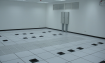
BSP Floors provides ESD flooring solutions that include conductive and dissipative flooring systems and identifies applications involving electronic equipment and raised-floor environments.
The term "conductive" should not be treated as a generic marketing description. The actual electrical resistance, construction, installation method, grounding arrangement, footwear system, and applicable test method all influence whether a floor is suitable for a particular ESD-protected area.
Why Static Control Matters in Electronics Environments
Electrostatic charge can develop through ordinary activities such as walking, movement of materials, friction, and contact between different surfaces. In a normal building this may simply result in a small static shock. In an electronics manufacturing or laboratory environment, however, an uncontrolled discharge can create a much more serious process risk.
Modern electronic devices can be sensitive to electrostatic phenomena. IEC 61340-5-1:2024 establishes requirements for organizations handling specified electronic parts, assemblies, and equipment and provides requirements for establishing, implementing, and maintaining an ESD control program.
That is why an ESD floor should be viewed as one component of a broader system rather than a standalone solution.
How Conductive Rubber Tiles Help Control ESD
A properly designed ESD flooring system provides a path through which electrical charge can be controlled and transferred toward ground.
A typical system may involve:
- Conductive flooring material.
- Conductive adhesive or an appropriate bonding system.
- Grounding connections or a grounding network.
- Suitable ESD footwear.
- ESD-controlled workstations and equipment.
- Periodic testing and verification.
BSP's ESD-flooring information describes conductive and dissipative flooring as solutions for controlling static charge and notes that ESD flooring can be installed with raised-floor systems for environments requiring protection of sensitive electronic devices.
The important point is that the flooring must function as part of the complete ESD control system. Installing a product advertised as "conductive" does not, by itself, establish ESD compliance.
Conductive vs. Static-Dissipative Flooring
Conductive and static-dissipative flooring are related but should not be treated as interchangeable terms.
|
Consideration |
Conductive Flooring |
Static-Dissipative Flooring |
|---|---|---|
|
Primary purpose |
Provides a relatively low-resistance path for controlled charge movement |
Controls charge movement at a higher resistance |
|
Typical application |
Areas requiring stronger static-control performance |
General ESD-protected environments |
|
Selection basis |
Project specifications and required resistance range |
Project specifications and required resistance range |
|
Grounding |
Requires an appropriate grounding system |
Requires an appropriate grounding system |
|
Compliance |
Must be evaluated against the applicable ESD standard |
Must be evaluated against the applicable ESD standard |
|
Best approach |
Select based on measured system requirements |
Select based on measured system requirements |
The correct choice depends on the facility's ESD control plan and specified performance criteria. ANSI/ESD S20.20 and IEC 61340-5-1 are recognized as technically equivalent program standards by the ESD Association, but the project should still identify which standard and test methods govern its acceptance criteria.
Key Benefits of Conductive Rubber Tiles
1. Effective Static Control
The primary reason to specify conductive rubber tiles is their ability to form part of a controlled static-dissipation pathway. This can help reduce the risk associated with uncontrolled electrostatic discharge in sensitive work areas.
2. Durability for Demanding Work Areas
Rubber flooring is often selected for environments where the floor must withstand regular foot traffic and equipment movement. A durable floor can help reduce the frequency of replacement and disruption.
For electronics manufacturing facilities and laboratories, this can be particularly valuable where flooring needs to support continuous operational activity.
3. Slip Resistance
Slip resistance is another important consideration when selecting industrial flooring. ESD performance should not be evaluated in isolation from worker safety.
A floor used around laboratories, production areas, or equipment should provide a surface appropriate for the facility's operating conditions, including expected moisture, cleaning procedures, traffic, and footwear.
4. Easier Routine Maintenance
A flooring system that can be cleaned without complicated refinishing procedures can simplify facility maintenance.
The maintenance method must, however, be compatible with the manufacturer's instructions and the ESD performance requirements. Some ESD rubber flooring systems specifically discourage conventional waxes or hard coatings because they can affect the flooring surface and its intended performance.
5. Suitability for Electronics and Laboratory Applications
Conductive flooring can be considered for electronics assembly areas, laboratories, server-related environments, cleanrooms, and other locations where electrostatic control is part of the facility requirements.
For lab flooring in Thailand, the specification should consider not only static control but also chemical exposure, cleaning practices, traffic, contamination requirements, and local project conditions.
6. Compatibility With Raised-Floor Systems
Many technical facilities need access to cabling, power, data infrastructure, or other services beneath the finished floor.
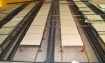
BSP Floors offers raised access flooring alongside ESD flooring solutions, allowing projects to consider the floor surface and underfloor infrastructure as an integrated design.
Conductivity Specs: What Should You Check?
Electrical resistance is one of the most important conductivity specs to review, but a single resistance number does not tell the whole story.
Before approving a flooring product, confirm:
Resistance range specified by the manufacturer.
Applicable ESD standard and test method.
Whether values apply to the material itself or the installed system.
- Grounding requirements.
- Adhesive requirements.
- Footwear and person-to-floor system requirements.
- Product qualification documentation.
- Installation verification requirements.
- Periodic compliance testing requirements.
ANSI/ESD S20.20 establishes requirements for an ESD control program, while IEC 61340-5-1:2024 similarly addresses the establishment, implementation, and maintenance of an ESD control program.
This is why simply asking, "Is this tile conductive?" is not enough. The better question is: Does the complete installed floor system meet the electrical and operational requirements of the intended ESD-protected area?
Step-by-Step: How to Specify Conductive Rubber Tiles
Step 1: Identify the ESD Risk
Determine what electronic components, equipment, or processes will operate in the space. Identify the sensitivity of the products and the ESD control requirements established by the facility.
Step 2: Define the Applicable Standard
Confirm whether the project specifies ANSI/ESD S20.20, IEC 61340-5-1, or another applicable requirement.
Do not mix acceptance criteria from different standards without confirming that they are appropriate for the project.
Step 3: Establish the Electrical Requirements
Document the required resistance and system-performance criteria before selecting the flooring.
Step 4: Review Product Documentation
Request technical data, test reports, installation instructions, and product qualification information from the supplier.
Step 5: Design the Grounding System
Conductive flooring needs an appropriate path to ground. Grounding should be designed and installed according to the project's electrical and ESD requirements.
Step 6: Install the Floor Correctly
Subfloor preparation, adhesive selection, tile installation, joints, grounding connections, and environmental conditions can all influence final performance.
Step 7: Test Before Handover
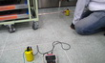
The installed system should be tested using the applicable methods and acceptance criteria. A product data sheet alone should not substitute for installed-system verification.
Step 8: Establish a Maintenance and Verification Plan
Cleaning, periodic electrical testing, inspection, and documentation should form part of the facility's ongoing ESD program.
Conductive Rubber Tiles in Cleanrooms
Cleanroom applications introduce another layer of requirements.
A floor in a controlled environment may need to address:
- Particle generation.
- Cleanability.
- Chemical exposure.
- Joint and seam performance.
- Surface durability.
- ESD control.
- Slip resistance.
- Compatibility with cleaning procedures.
BSP's Thailand-focused ESD information identifies electronics facilities, cleanrooms, medical laboratories, and server environments as applications where ESD flooring can play an important role.
However, ESD performance and cleanroom compliance are separate considerations. A flooring product should not be described as automatically "cleanroom compliant" merely because it has ESD properties. The project specification should identify the relevant cleanliness classification and required testing.
Conductive Rubber Tiles vs. Other Flooring Options
|
Factor |
Conductive Rubber Tiles |
Conductive/ESD PVC |
Standard Vinyl |
Conventional Rubber Flooring |
|---|---|---|---|---|
|
ESD application |
Designed for appropriate ESD systems |
Available in ESD configurations |
Depends on product |
Not necessarily ESD-rated |
|
Conductivity control |
Product-specific |
Product-specific |
Generally not intended for ESD control |
Varies |
|
Durability |
Generally strong for demanding applications |
Depends on specification |
Depends on product |
Generally durable |
|
Maintenance |
Follow ESD-specific procedures |
Follow manufacturer guidance |
Generally straightforward |
Generally straightforward |
|
Electronics applications |
Suitable when correctly specified |
Common option |
Requires suitable ESD construction |
Requires ESD-specific product |
|
Selection priority |
Electrical + operational performance |
Electrical + operational performance |
General flooring needs |
General flooring needs |
The comparison shows why the word "rubber" alone does not determine whether a floor is suitable for ESD protection. The actual product construction and tested performance are what matter.
Expert Tips for Lab Flooring Thailand
For projects involving lab flooring in Thailand, the local operating environment should be considered alongside the technical specification.
Thailand's electronics and industrial sectors can include facilities with demanding requirements for static control, cleanliness, durability, and maintenance. BSP Floors specifically provides ESD flooring solutions for Thai industrial applications and describes conductive and dissipative flooring options for electronics and controlled environments.
An effective specification should therefore begin with the facility's process requirements rather than starting with a particular flooring material.
Ask:
- What devices or products are being protected?
- What ESD standard governs the project?
- What electrical resistance range is required?
- Is the area also a controlled cleanroom?
- What chemicals and cleaning methods will be used?
- How much traffic will the floor receive?
- Is a raised access floor required?
- What documentation will be required for handover?
- How often will compliance be verified?
This approach helps avoid selecting a technically attractive floor that does not fit the complete operating environment.
Frequently Asked Questions
Are conductive rubber tiles suitable for electronics manufacturing?
Yes, conductive rubber tiles can be suitable for electronics manufacturing when the specific product, installation system, grounding arrangement, and measured performance meet the facility's ESD requirements. They should be selected as part of a complete ESD control program rather than as an isolated product.
What is the difference between conductive and anti-static flooring?
"Anti-static" is a broad term that can refer to flooring designed to reduce or control static generation or accumulation. Conductive flooring specifically provides a controlled electrical pathway with a defined resistance characteristic. The exact performance should be verified against the applicable standard.
Do conductive rubber tiles need to be grounded?
A conductive ESD flooring system normally requires an appropriate path to ground as part of its design. The grounding arrangement should be designed and installed according to the applicable ESD and electrical requirements.
Can conductive rubber tiles be used in cleanrooms?
They can be considered for cleanroom applications, but ESD performance alone does not establish cleanroom compliance. Particle generation, cleanability, chemical compatibility, joints, and the facility's applicable cleanliness requirements must also be evaluated.
How are conductive floors maintained?
Maintenance should follow the flooring manufacturer's instructions and the facility's ESD control procedures. Routine cleaning should use compatible products and methods, while periodic electrical verification can help confirm that the installed system continues to perform as required.
Conclusion
Conductive rubber tiles can be an effective flooring choice for ESD-sensitive environments because they combine controlled electrical performance with practical flooring characteristics such as durability, cleanability, and slip resistance. They can be particularly relevant to electronics manufacturing areas, laboratories, cleanrooms, and other controlled environments where electrostatic discharge must be managed.
The most important consideration, however, is not simply whether a tile is labelled "conductive." The complete installed system must be designed around the required conductivity specs, grounding method, applicable ESD standards, installation process, footwear system, maintenance procedures, and verification program.
The LEEDuser competitor discussion illustrates an important real-world specification issue: a project team was unable to find a conductive rubber tile with the desired FloorScore certification and ultimately selected conductive vinyl instead. This reinforces the need to evaluate the complete project specification rather than assuming one flooring material will satisfy every requirement.
If you are planning an electronics facility, laboratory, cleanroom, or other ESD-sensitive environment, contact us to discuss the flooring requirements, conductivity specifications, installation conditions, and appropriate ESD-flooring solution for your project.